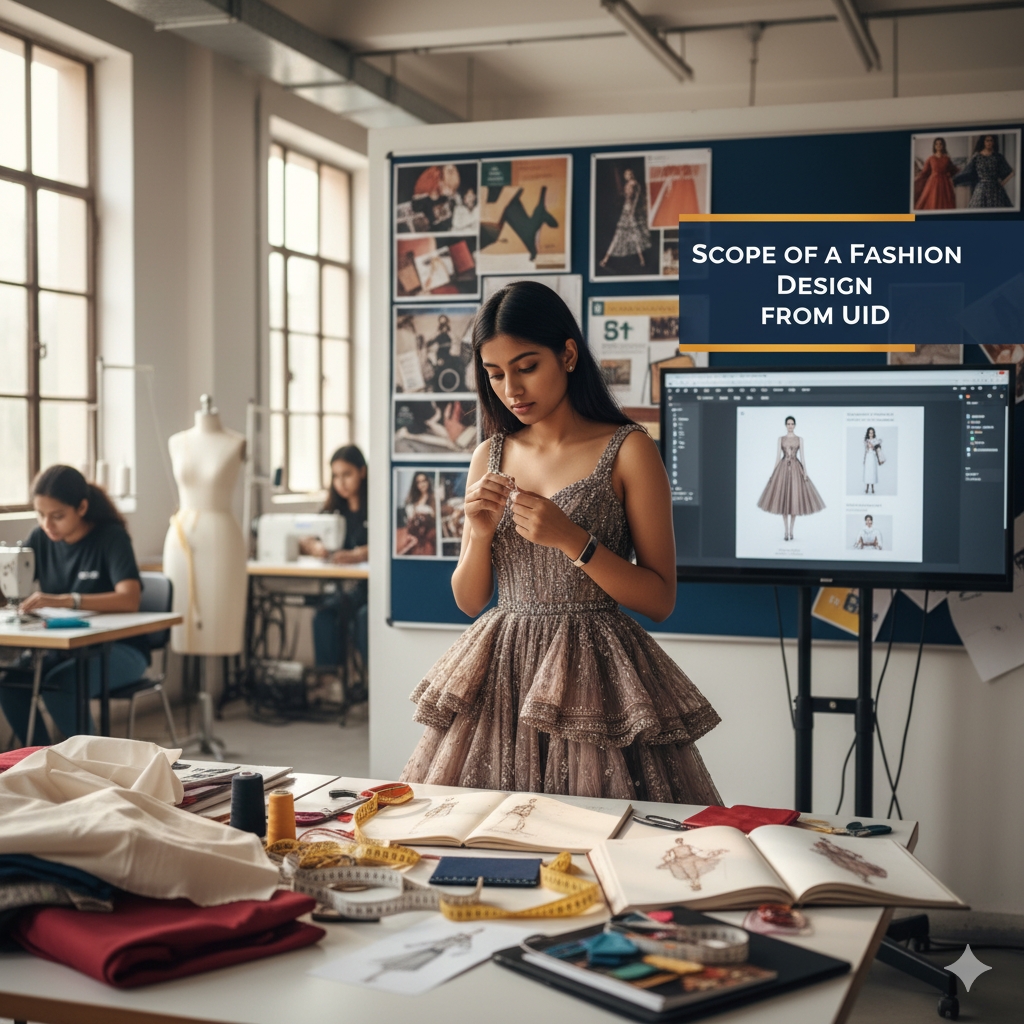
Textile design encompasses the art and science of developing patterns, structures, and designs for woven, knitted, or printed fabrics.It involves both creativity and technical knowledge because textiles are not only about visual beauty but also about durability, usability, and function. A textile designer works with colors, fibers, yarns, and fabrics to create designs that can be used in fashion garments, upholstery, home décor, industrial fabrics, and even smart textiles.
This field blends traditional art skills such as drawing and painting with modern digital design tools and textile production technologies. Textile designers often study consumer preferences, fashion trends, and cultural influences to create designs that meet the demands of global markets.
To pursue a career in textile design, students usually need a formal education in art, design, or fashion-related fields. Here’s the step-by-step education pathway:
1. Eligibility After School
10+2 (Higher Secondary Education): Students from any stream (Science, Commerce, or Arts) can apply, though having an Arts or Science background may be more beneficial.
Minimum marks: Most institutions expect at least 50% in Class 12.
2. Undergraduate Programs in Textile Design
Course options:
Bachelor of Design (B.Des) in Textile Design
Bachelor of Fine Arts (BFA) in Applied Arts or Textile Arts
Bachelor of Science (B.Sc.) in Textile Design or Fashion & Textile Design
Bachelor of Fashion Design with specialization in Textiles
Duration: 3 to 4 years
Admission process: Most reputed institutes conduct entrance exams testing drawing ability, creativity, and design aptitude. Some private colleges may also allow admission based on merit (Class 12 scores).
Core Subjects Covered:
Textile Science and Fiber Study
Weaving, Knitting, Printing, and Dyeing Techniques
Surface Ornamentation (embroidery, embellishment)
Fashion Illustration and CAD (Computer-Aided Design)
Color Theory and Design Principles
Fabric Analysis and Textile Testing
History of Textiles and Fashion Trends
3. Postgraduate Programs in Textile Design
Course options:
Master of Design (M.Des) in Textile Design
M.Sc. in Textile & Apparel Design
Master of Fine Arts (MFA) in Textile Art
Duration: 2 years
Eligibility: Bachelor’s degree in design, fine arts, fashion, or related field.
Focus: Research-based projects, advanced digital textile design, sustainable textiles, and innovative fabric technologies.
4. Diploma and Certificate Programs
For students who don’t want a full degree, many institutes offer 6 months to 2 years diploma or certificate courses in textile design. These are more skill-focused and cover areas like weaving, printing, and CAD for textiles.
The fees vary depending on whether the institute is government-run, semi-government, or private. Below is an approximate range:
Government/State Universities:
₹50,000 – ₹1,50,000 for the full course (3–4 years)
Private Colleges and Design Institutes:
₹2,00,000 – ₹8,00,000 for the full course (3–4 years)
Postgraduate Programs:
₹1,00,000 – ₹5,00,000 for 2 years
Diploma/Certificate Courses:
₹40,000 – ₹1,50,000 depending on duration and facilities
Additional costs may include studio materials, textile samples, software, and industrial visits.
Creativity and Imagination to create appealing patterns.
Knowledge of Fabrics and Fibers for technical accuracy.
Drawing & Illustration Skills to translate ideas into designs.
Trend Analysis to match global and cultural fashion demands.
Attention to Detail for precision in prints, weaves, and textures.
A degree in textile design opens doors to multiple sectors:
Fashion Houses & Apparel Brands: Designing fabrics for garments.
Export Houses: Creating textile designs for international markets.
Automotive & Industrial Fabrics: Designing seat covers, carpets, technical textiles.
Freelancing/Entrepreneurship: Starting your own textile brand or studio.
Research & Sustainability: Developing eco-friendly and innovative fabrics.
Fresh graduates: ₹3,00,000 – ₹5,00,000 per annum
Experienced designers: ₹6,00,000 – ₹12,00,000 per annum
Entrepreneurs and Freelancers: Highly variable, depending on creativity and market reach
To become a textile designer, one needs to complete a degree or diploma in textile or fashion design, gain hands-on training, and develop both artistic and technical skills. While the fees can vary depending on the institution, the long-term career opportunities are diverse—from fashion and home décor to industrial textiles and sustainable innovations. With rising demand for new fabrics and designs globally, textile design offers a rewarding future for those passionate about art, fabric, and innovation.